Across the world, people have always found ways to preserve their stories. Objects like wampum belts, kente cloth, and sacred texts carry memory across generations.
These objects represent the past, but they also carry it forward and help communities understand who they are. From songs that map the land to carved histories and woven patterns, storytelling has taken physical form across cultures.
To understand why these objects matter, we need to begin earlier, before the written word and when stories lived entirely in ones voice.
Oral Traditions: The First Storytelling
Before writing, there were voices. Across cultures, people preserved history through stories, songs, and spoken law. Oral traditions acted as humanity’s first archive, carrying identity and knowledge across generations.
In West Africa, griots preserved the genealogies of kingdoms through performance. In ancient Greece, bards recited epics like The Iliad and The Odyssey from memory. Norse skalds told stories of ancestors and heroes through oral poetry.
Among the most enduring traditions are those of Aboriginal and Torres Strait Islander peoples. Their Songlines map the land through story and connect people to Country, history, and identity. These stories are not only narratives. They also act as guides, teaching geography, law, and belonging.
As stories spread across time and distance, people began to find new ways to preserve them.
“See the connectivity between all of the elements, between the sky, between the Earth, between the water, between magnificent sacred sites that are in the landscape that connect our people through this ancient wisdom and these ancient stories in song”
— Dr Anne Poelina, Nyikina Warrwaare
The Marlaloo Songline is one of these stories. It tells of two serpents who travelled across Country, naming sacred places and shaping the land as they moved.
Passed down through generations, it connects people to Country through voice and rhythm. It keeps both geography and identity alive through song.
Watch Elders share the Marlaloo Songline through song:
Each Songline acts as both story and map. It links people to Country and to one another, preserving memory and connection.
Totem Poles: Carved Histories of the Pacific Northwest
First traced to the Haida peoples, totem poles have long stood along the Pacific Northwest Coast as carved testaments to memory. From Haida Gwaii to Haisla territory, these towering cedar sculptures carry histories in their form. They are stories of lineage, loss, and belonging told not through words, but through wood. Each figure carved into the grain becomes a chapter where ancestors, animals, and spirits entwine to teach lessons, honour alliances, and preserve the unseen.

One such story is carried in the G’psgolox Totem Pole raised in 1872 after an epidemic devastated a community. Its carvings record a vision experienced by a Haida chief who, guided by the spirit Tsooda, sought balance between life and death. At the top, Tsooda wears a revolving hat symbolizing wisdom and guidance. Below him sits Asoalget, a spirit messenger, and a mythical underwater grizzly, a being of power and transformation. Together, these figures tell a story of grief transformed into renewal, carrying a legacy meant to be seen, remembered, and passed down through generations.
For generations, poles like this one have stood as more than monuments. They are teachers, storytellers, and archives. Each one passes on values and history through its figures. To those who know how to read them, they speak of community, connection, and continuity. Even as cedar ages and colours fade, the stories remain, carried forward by each new generation who looks up and listens.
Along the Pacific Northwest Coast, totem poles preserve stories through carved cedar. Originating among the Haida and other Indigenous nations, these structures record lineage, loss, and belonging.
Each figure represents part of a story. Some show ancestors, while others represent animals or spiritual beings. Together, they form visual narratives that teach lessons and reflect relationships.
The G’psgolox Totem Pole, raised in 1872 after a devastating epidemic, tells a story of grief and renewal. Its carvings reflect a vision experienced by a Haida chief and include spiritual figures connected to transformation and balance.
Totem poles are not simply monuments. They are living records. Even as the wood ages, the stories remain and are carried forward by the communities who continue to interpret and share them.
Wampum Belts: Shell Beads as Living Records
Like the cedar poles of the Northwest, other nations found ways to give their stories form. Along the Eastern Woodlands, memories were woven into wampum—beads crafted from purple and white clamshells— instead of carved. These beads, spun into intricate lines, were fashioned into “wampum belts,” acting as living records that bare the history of treaties and alliances, their designs preserving collective memory through patterns of shell.
“The speaker puts the words of the agreement into the wampum as the strings or belts are woven together.”
At the Onondaga Nation—one of the five founding nations of the Haudenosaunee Confederacy—the Keepers of the Central Fire continue to safeguard these sacred belts. For centuries, they have carried the stories of peace and governance that shaped Indigenous diplomacy long before the written word arrived.
Two belts remain famous today:
- The Penn Treaty Belt: It depicts two figures—one Lenape, one Englishman—clasping hands in a fragile promise of peace.

- The Hiawatha Belt: It records the confederacy’s founding. With its linked squares and central tree representing the Five Nations beneath the Tree of Peace.
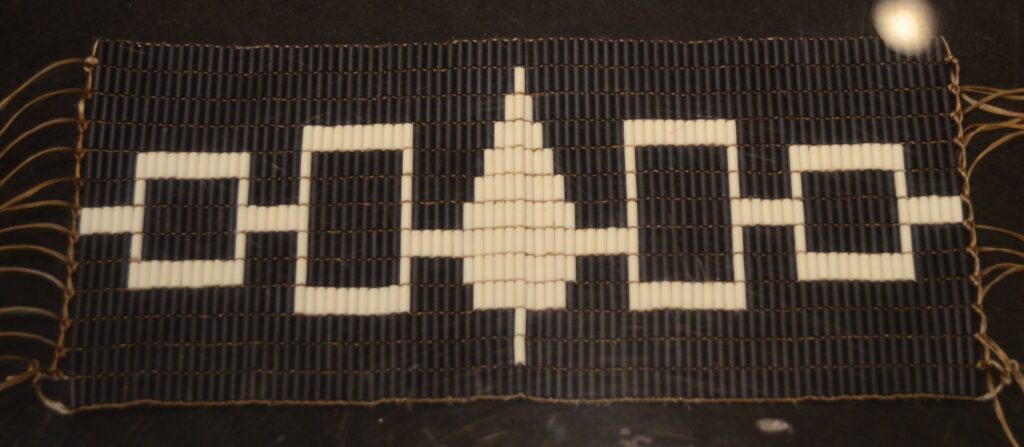
Centuries later, these belts are still carried into council circles, not as relics behind glass, but as living storytellers reminding the Haudenosaunee of their past and their obligations to the future.
“It was like a historic document to us, a living document, and it told our story for generations.”
— Paula Peters, Mashpee Wampanoag historian and cultural leader
Kente Cloth: Weaving Proverbs into Pattern
In the former Asante Kingdom (modern-day Ghana), another form of woven storytelling emerged: kente cloth. According to the Minneapolis Institute of Art, kente originated as ceremonial wear for royalty in the 17th century. Each narrow strip of woven silk or cotton carried a name and meaning, often inspired by Akan proverbs or historical events.
“Kente is more than just a cloth. It is an iconic visual representation of the history, philosophy, ethics, oral literature, religious belief, social values, and political thought of West Africa.”
Colour symbolism gave the cloth its voice:
- Gold signified royalty and wealth.
- Green symbolized renewal and growth.
- Black expressed spiritual strength and maturity.
A weaver might create a new pattern to commemorate a chief’s coronation or a season of good harvest, making the cloth a “living record” of community milestones. Today, kente has expanded beyond royal courts to symbolize cultural pride across Ghana, West Africa, and the African diaspora, appearing in graduation stoles, ceremonies, and festivals worldwide.
Watch as a Ghanaian weaver brings stories to life through kente, each pattern and colour she weaves carrying a proverb, a memory, and a message:
Just as kente threads stories into fabric, many of the world’s great religions have woven meaning into their sacred symbols. Whether in wood, parchment, or gold, faith traditions found their own ways to make story visible and lasting.
Sacred Objects of Faith: Stories in Symbols
Across religions, these sacred forms carry not only history but devotion, becoming vessels of memory, faith, and law.
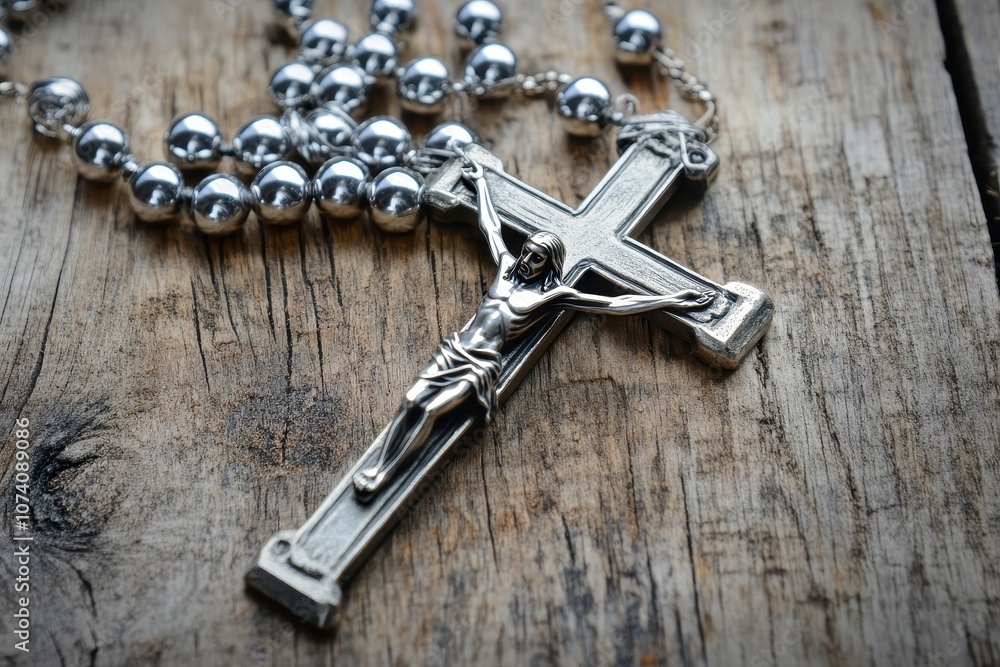
The Christian cross is perhaps the most familiar of these symbols. Once an instrument of execution, it became a sign of sacrifice and renewal. Whether carved in wood, cast in metal, or worn close to the heart, the cross tells the story of Christ’s suffering and resurrection. Standing as a reminder of endurance and grace that has travelled across centuries and continents.
The Torah scroll holds a similar reverence in Judaism. Each one is handwritten by a trained sofer (scribe) on parchment prepared from kosher animal hide. The process is painstaking and sacred, where even a single error can render a scroll unfit for ritual use. When read aloud in synagogue, its words are sung in ancient melodies, merging the oral and the written into one act of remembrance.
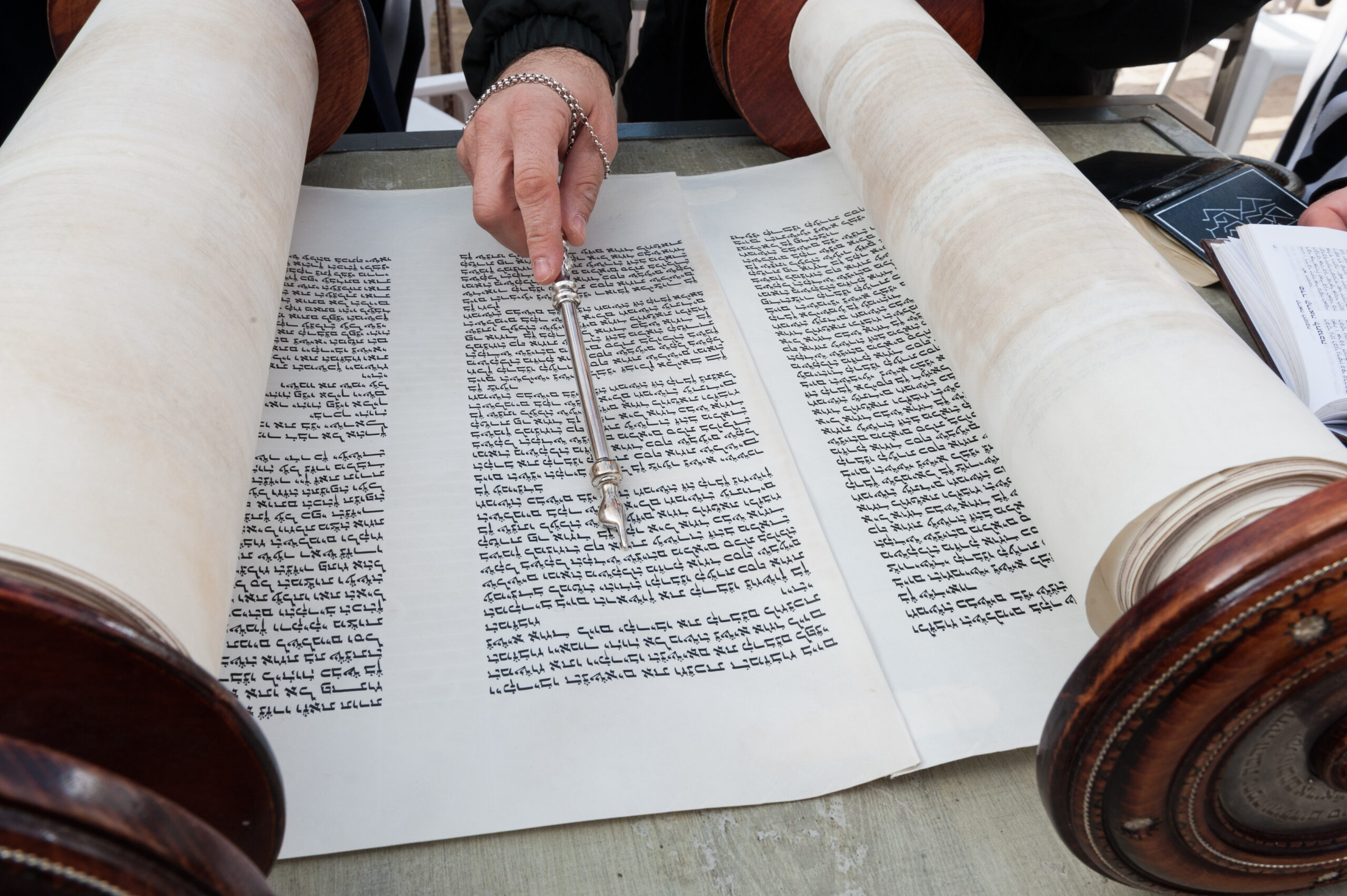
“The Torah is a tree of life to those who cling to it. All who uphold it are happy”
The Qur’an manuscript is equally revered. As The Met’s The Written Word in Islam explains, “Because of the exalted position of the Qur’an in Muslim societies, historically special attention was paid to the production, illumination, decoration, and display of Qur’an manuscripts.”
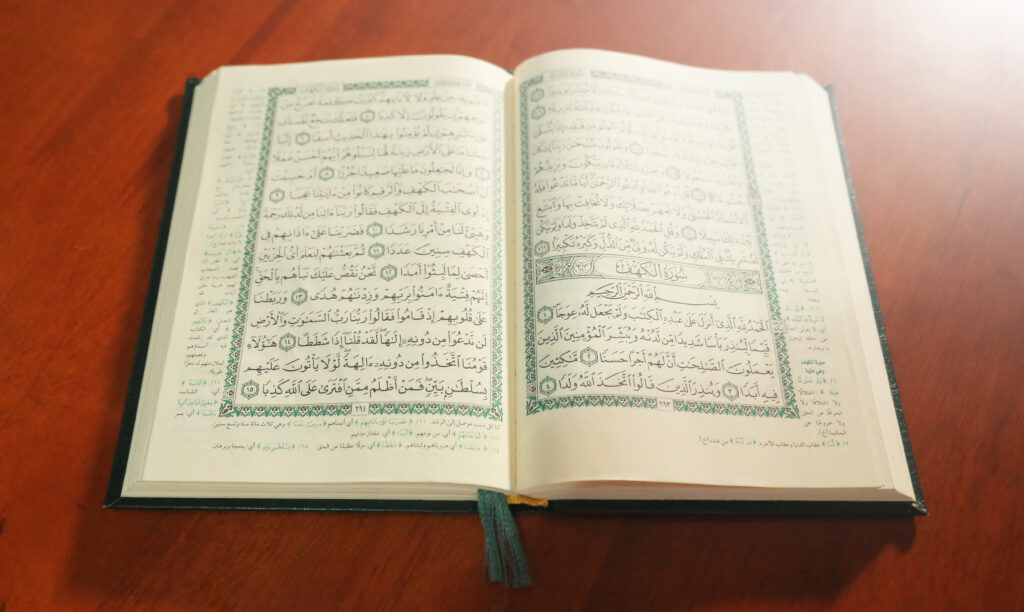
“Due to its association with the written word of God, calligraphy is considered by Muslims to be the highest art form.”
Luxuriously illuminated Qur’an manuscripts were often placed on carved wooden bookstands—rahla—and displayed in mosques and religious schools (madrasas). These manuscripts, adorned with gold leaf and intricate borders, transformed words into images of devotion. To see one open beneath lamplight was to witness faith turned visible.
Though these sacred objects reach back thousands of years, the impulse behind them remains unchanged. Each one tells a story of belief and beauty, of a people striving to give lasting form to the divine.
Across time and culture, the materials may change but the impulse remains the same. We make meaning tangible because stories are what keep us human. They remind us of who we are, and who we hope to be.
From the first oral traditions to today’s digital archives, each generation finds its own way to resist silence. Whether sung beneath open skies, woven in silk, or carved into stone, every culture leaves behind a trace — a keepsake of its voice.
These objects are the conversations that continue long after their makers are gone. And in listening to them, we remember that storytelling, in all its forms, is how we endure.
References
Australian Institute of Aboriginal and Torres Strait Islander Studies. (n.d.). Marlaloo Songline. https://aiatsis.gov.au/explore/marlaloo-songline
Australian Institute of Aboriginal and Torres Strait Islander Studies. (n.d.). Songs Australia. https://aiatsis.gov.au/about/connect-us/make-difference/songs-australia
Biblical Archaeology Society. (2025, September 30). The staurogram. Bible History Daily. https://www.biblicalarchaeology.org/daily/biblical-topics/crucifixion/the-staurogram/
British Museum. (n.d.). Object H_1902-0315-13 (Collection object). https://www.britishmuseum.org/collection/object/H_1902-0315-13
CBC Radio. (2020, September 18). 350 years of searching: Wampanoag still looking for historic wampum belt. CBC News. https://www.cbc.ca/radio/unreserved/mayflower-400-a-deep-dive-into-american-thanksgiving-1.5807974/350-years-of-searching-wampanoag-still-looking-for-historic-wampum-belt-1.5807976
Encyclopaedia Britannica. (n.d.). Griot. https://www.britannica.com/art/griot
Encyclopaedia Britannica. (n.d.). Skald. https://www.britannica.com/art/skald
Ganondagan State Historic Site & Seneca Art & Culture Center. (n.d.). Wampum. https://www.ganondagan.org/wampum
Haida Nation. (n.d.). Haida Nation. https://www.haidanation.ca/
Haudenosaunee Confederacy. (n.d.). Haudenosaunee Confederacy. https://www.haudenosauneeconfederacy.com/
Jewish Virtual Library. (n.d.). The Torah scroll. https://www.jewishvirtuallibrary.org/the-torah-scroll
Minneapolis Institute of Art. (n.d.). Asante Kente cloth [Artwork in focus]. https://new.artsmia.org/programs/teachers-and-students/teaching-the-arts/artwork-in-focus/asante-kente-cloth
Onondaga Nation. (n.d.). Wampum. https://www.onondaganation.org/culture/wampum/
Panorama Journal. (n.d.). Re-reading wampum. https://journalpanorama.org/article/re-reading-wampum/
Peacock, S. (2024). Repatriation of the G’psgolox Totem Pole: A study of its context, process and outcome. International Journal of Cultural Property. https://www.cambridge.org/core/journals/international-journal-of-cultural-property/article/repatriation-of-the-gpsgolox-totem-pole-a-study-of-its-context-process-and-outcome/C195CB8F432C4BF2ADD10C88E8792484
Sefaria. (n.d.). Proverbs 3:18 (Hebrew–English). https://www.sefaria.org/Proverbs.3.18?lang=he-en&utm_source=myjewishlearning.com&utm_medium=sefaria_linker
Smarthistory. (n.d.). Kente cloth. https://smarthistory.org/kente-cloth/
The Metropolitan Museum of Art. (n.d.). Calligraphy in Islamic art [Essay]. https://www.metmuseum.org/essays/calligraphy-in-islamic-art
The Metropolitan Museum of Art. (n.d.). The written word in Islam [Educator resource]. https://www.metmuseum.org/learn/educators/curriculum-resources/art-of-the-islamic-world/unit-one/the-written-word-in-islam
World History Encyclopedia. (n.d.). Greek literature. https://www.worldhistory.org/Greek_Literature/
World History Encyclopedia. (n.d.). Hiawatha belt (Image). https://www.worldhistory.org/image/13279/hiawatha-belt/